
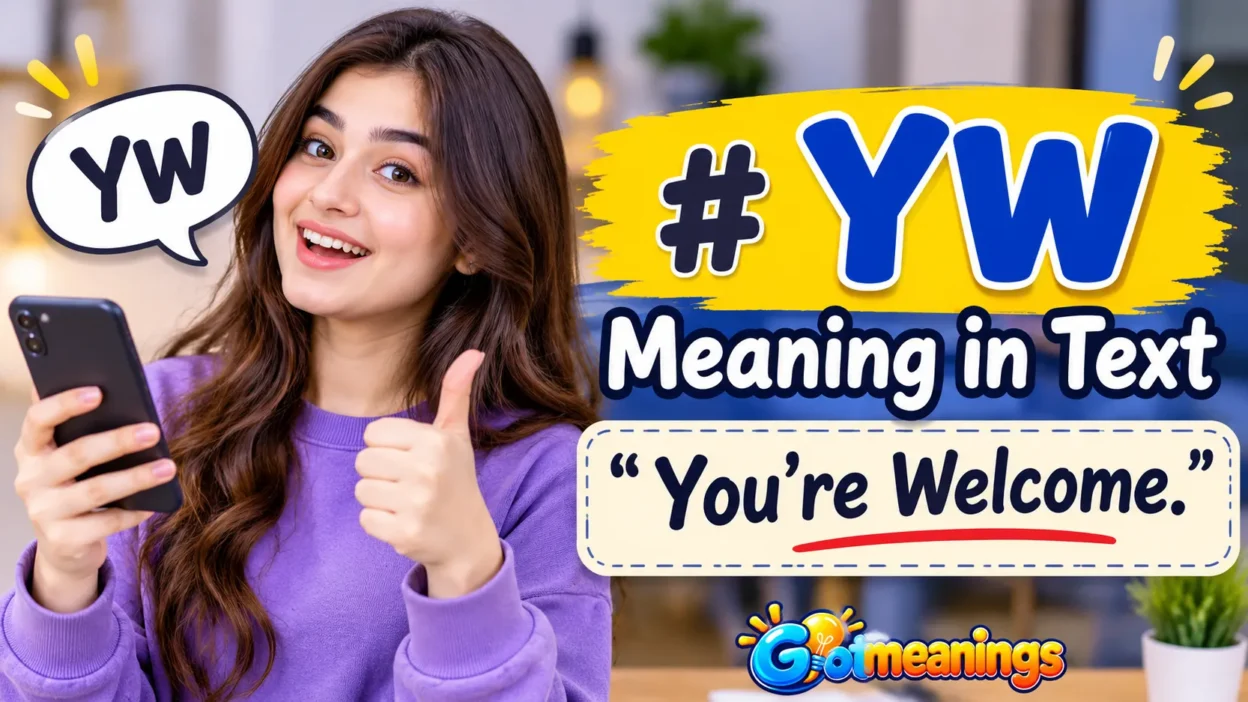
If someone replies with YW after you thank them, they are most likely saying “You’re Welcome.” This short abbreviation is common in text messages, online chats, and social media conversations. It is a quick and friendly way to acknowledge someone’s thanks without typing a full sentence.
The YW meaning in text is usually simple, but its tone can change depending on the conversation. It may sound polite, casual, warm, or slightly distant. Some people use it with friends, while others prefer it in everyday online conversations.
In this guide, you’ll learn what YW means in texting, whether it has other meanings, how people use it on different platforms, and how to respond when someone sends it. You’ll also see realistic chat examples and common mistakes to avoid.
| Quick Detail | Meaning |
|---|---|
| Text abbreviation | YW |
| Most common meaning | You’re Welcome |
| Full form | You’re Welcome |
| Tone | Usually polite, casual, and friendly |
| Common usage | Text messages, chats, and social media |
| Typical purpose | Responding to someone saying thank you |
What Does YW Mean in Text & Chat?
YW means “You’re Welcome” in text messages and online chats. People use it to respond when someone thanks them for helping, sharing something, or doing a favor.
Instead of typing “You’re welcome,” they can simply send YW. It makes the conversation shorter while keeping the same basic meaning.
For example:
Person A: “Thanks for sending me the notes!”
Person B: “YW 😊”
Here, YW means “You’re welcome.” The emoji makes the response feel warm and friendly.
Why Do People Use YW?
People use YW because it is:
- Short: It saves time when typing.
- Convenient: It works well in quick conversations.
- Friendly: It acknowledges someone’s appreciation.
- Easy to understand: Many people recognize it in everyday texting.
YW is especially useful when the conversation does not need a long response.
Is YW Polite or Casual?
YW is generally polite, but it has a casual style.
It can sound friendly between friends or simple and professional enough for informal work chats. However, in a formal email or business message, writing “You’re welcome” in full may feel more appropriate.
The meaning stays the same, even when the tone changes.
Full Form, Stands For & Short Meaning of YW
The full form of YW is You’re Welcome.
It is an abbreviation made from the first letters of the words “You’re” and “Welcome.”
Here’s a simple breakdown:
| Term | Meaning |
|---|---|
| Y | You’re |
| W | Welcome |
| YW | You’re Welcome |
What Does You’re Welcome Mean?
“You’re welcome” is a polite expression used after someone says thank you.
It tells the other person that their appreciation is acknowledged and that you are happy to have helped, or that thanking you is not necessary.
For example:
Person A: “Thank you for helping me with my homework.”
Person B: “You’re welcome!”
The short texting version is:
Person A: “Thanks for helping me.”
Person B: “YW!”
Both responses communicate the same basic message.
Is YW an Acronym or an Abbreviation?
YW is commonly described as a texting abbreviation or initialism.
It uses the first letters of the words in “You’re Welcome.” People generally read it as the complete phrase rather than pronouncing the letters as a separate word.
Origin, History & First Known Use of YW
YW developed as part of the wider use of shortened expressions in digital communication.
People often shorten common phrases when typing messages because abbreviations make conversations quicker and easier. Expressions such as TY, THX, and YW fit naturally into this style.
However, a precise first-use date for YW in texting is not firmly established here. It would be misleading to claim that a particular person, website, or messaging service invented it without reliable historical evidence.
How YW Became Common in Online Conversations
YW is easy to understand because it represents a familiar everyday expression.
As people began using abbreviations in text messages, instant messaging, and online chats, short replies became a convenient way to keep conversations moving.
The expression also works well alongside other common texting abbreviations:
- TY = Thank You
- THX = Thanks
- NP = No Problem
- YW = You’re Welcome
- TYSM = Thank You So Much
These expressions help people communicate quickly without losing the main message.
How People Use YW in Daily Conversations
People usually use YW after receiving thanks.
It can appear in conversations about favors, information, advice, gifts, support, or everyday help.
1. After Someone Thanks You
This is the most common use of YW.
Person A: “Thanks for explaining that question.”
Person B: “YW!”
The response acknowledges the person’s gratitude.
2. After Helping a Friend
YW can be a simple response when someone appreciates a favor.
Person A: “Thanks for picking me up today.”
Person B: “YW, anytime!”
This sounds friendly and suggests that helping again would be fine.
3. After Sharing Information
People also use YW after answering questions or sending useful information.
Person A: “Thank you for sending the address.”
Person B: “YW, hope you find it!”
The abbreviation keeps the conversation casual.
4. In Friendly or Affectionate Conversations
YW can also appear in conversations between close friends, family members, or partners.
Person A: “Aww, thanks for remembering my birthday ❤️”
Person B: “YW ❤️”
The heart emoji adds warmth, making the response feel more affectionate.
YW Meaning Across WhatsApp, Instagram, TikTok & Snapchat
The meaning of YW usually remains the same across popular messaging and social media platforms.
It generally means “You’re Welcome,” rather than having a different official meaning on each app.
| Platform | Typical Use of YW |
|---|---|
| Responding to thanks in private chats or groups | |
| Replying to appreciation in DMs or comments | |
| TikTok | Acknowledging thanks in comments or messages |
| Snapchat | Sending quick replies after someone says thanks |
| Facebook Messenger | Responding to gratitude in conversations |
YW Meaning on WhatsApp
On WhatsApp, YW is commonly used in personal chats and group conversations.
Someone might send it after receiving thanks for sharing a photo, document, location, or helpful message.
Example:
Person A: “Thanks for sharing the video.”
Person B: “YW 😂”
YW Meaning on Instagram
On Instagram, YW can appear in direct messages or comments.
It may be used after someone thanks another person for a compliment, recommendation, or helpful response.
YW Meaning on TikTok
On TikTok, people may use YW in comment replies or messages.
For example, if someone thanks a creator for answering a question, the creator might reply with YW.
YW Meaning on Snapchat
Snapchat conversations often involve short messages and quick replies.
YW fits naturally into this style when someone appreciates a snap, message, or favor.
Important: The app does not determine the meaning by itself. The surrounding conversation is the best way to understand YW.
Different Meanings of YW in Other Fields
Although YW most commonly means “You’re Welcome” in texting, abbreviations can have different meanings in other contexts.
YW in General Online Conversations
In everyday messaging, You’re Welcome is the standard interpretation.
Some people may use YW differently in a private conversation, but that does not make another interpretation a universal texting meaning.
YW as a Context-Dependent Expression
Occasionally, someone may use YW as shorthand for a different phrase, such as “Yeah, Whatever,” depending on their personal texting habits.
However, this is a less common and context-dependent interpretation.
For example:
Person A: “Do you want to go to the party?”
Person B: “YW, I guess.”
If the conversation suggests disagreement or indifference, the sender may be using YW differently. Still, “Yeah, Whatever” is not the standard meaning readers should assume.
YW in Technical or Professional Contexts
Outside texting, YW may appear as an abbreviation, code, or set of initials in specialized contexts.
Its meaning can depend on the subject, organization, or document in which it appears.
There is no single alternative full form that applies to every professional field.
Common Confusions, Mistakes & Wrong Interpretations
YW is usually easy to understand, but a few mistakes can happen when people interpret short messages.
Confusing YW With TY
These two abbreviations have different meanings.
| Abbreviation | Meaning |
|---|---|
| TY | Thank You |
| YW | You’re Welcome |
TY expresses gratitude, while YW responds to gratitude.
Assuming YW Is Rude
YW is not inherently rude.
A short reply may feel less expressive than a longer message, but it does not automatically mean the sender is annoyed or uninterested.
For example:
Person A: “Thanks for helping!”
Person B: “YW.”
This can simply be a normal, brief response.
Confusing YW With Yeah, Whatever
Some readers may interpret YW as “Yeah, Whatever” because of the letters.
However, in ordinary thank-you conversations, You’re Welcome is the much more likely meaning.
Context matters when the message appears in an unusual situation.
Ignoring Emojis and Punctuation
The same abbreviation can feel different depending on how it is written.
| Message | Possible Tone |
|---|---|
| YW 😊 | Friendly |
| YW!! | Cheerful or enthusiastic |
| YW ❤️ | Warm or affectionate |
| yw | Casual |
| YW. | Brief or neutral |
These are possible impressions, not fixed rules. The sender’s normal texting style matters too.
Similar Terms, Alternatives & Related Slang
Several texting abbreviations serve the same purpose as YW or appear in similar conversations.
| Abbreviation | Full Meaning | How It Is Used |
|---|---|---|
| NP | No Problem | Shows that helping was not difficult |
| NVM | Never Mind | Cancels or dismisses something |
| TY | Thank You | Expresses gratitude |
| TYSM | Thank You So Much | Expresses stronger gratitude |
| THX | Thanks | Short form of thank you |
| YW | You’re Welcome | Responds to gratitude |
| OFC | Of Course | Shows agreement or willingness |
| Anytime | Anytime | Suggests willingness to help again |
| No worries | No worries | Reassures someone that thanks or concern is unnecessary |
YW vs. NP
YW acknowledges someone’s thanks.
NP focuses more on saying that the favor was not a problem.
For example:
Person A: “Thanks for helping me.”
Person B: “YW!”
Or:
Person B: “NP!”
Both are appropriate, but they express slightly different ideas.
YW vs. OFC
OFC means “Of Course.”
It may be used when someone thanks you for something you were happy or expected to do.
Person A: “Thanks for checking on me.”
Person B: “OFC ❤️”
This sounds caring and reassuring.
Examples of YW in Real Chat Situations
The following examples show how YW can fit into different everyday conversations.
Example 1: A Simple Friendly Reply
Person A: “Thanks for sending me the picture.”
Person B: “YW 😊”
Meaning: The sender acknowledges the thanks in a friendly way.
Example 2: Helping With Schoolwork
Person A: “Thank you for explaining the assignment.”
Person B: “YW, glad it helped!”
Meaning: YW is used after offering helpful information.
Example 3: A Casual Conversation
Person A: “Thanks for sharing your playlist.”
Person B: “yw lol”
Meaning: The lowercase abbreviation and “lol” make the reply relaxed and casual.
Example 4: An Affectionate Conversation
Person A: “Thank you for always being there for me ❤️”
Person B: “YW, always here for you ❤️”
Meaning: The response communicates warmth and support.
Example 5: A Quick Group Chat Reply
Person A: “Thanks everyone for helping me finish this!”
Person B: “YW!”
Meaning: The reply acknowledges gratitude in a group conversation.
Example 6: A Potentially Confusing Reply
Person A: “Thanks for the advice.”
Person B: “YW.”
Meaning: This is most likely a simple You’re Welcome. The period may make it appear more serious, but it does not prove the sender is upset.
Example 7: A Playful Conversation
Person A: “Thanks for carrying the whole team 😂”
Person B: “YW, I do my best 😂”
Meaning: YW is used playfully, with humor added by the rest of the message.
How to Reply When Someone Says YW
Usually, you do not need to reply to YW at all. It is already a response to your thank-you message.
However, you can continue the conversation if you want.
If Someone Sends YW After Your Thanks
You can respond with:
- “😊”
- “Appreciate it!”
- “Thanks again!”
- “You’re the best!”
- “❤️”
These replies are friendly and natural.
If Someone Says YW in a Serious Conversation
If the person helped you with something important, you can acknowledge their support.
Example:
Person A: “Thanks for helping me through that.”
Person B: “YW.”
Person A: “I really appreciate it.”
This keeps the conversation sincere.
If Someone Says YW Playfully
You can match their energy.
Person A: “Thanks for the snack 😂”
Person B: “YW 😂”
Person A: “You’re officially my favorite.”
A playful reply works well when both people are joking.
If You Are Unsure What YW Means
If the abbreviation appears in a conversation where no one has said thank you, you can ask:
- “What do you mean by YW?”
- “Does YW mean you’re welcome here?”
- “Wait, what does YW stand for?”
Asking directly is better than assuming the sender intended something rude.
Is YW Still Popular? Trends & Online Usage
YW remains a recognizable texting abbreviation because it represents a common expression used in everyday conversations.
It is useful in situations where people want to acknowledge gratitude without writing a full sentence.
However, there is no verified current statistic presented here that proves how frequently YW is used compared with other abbreviations in 2026.
Why People Continue Using YW
The abbreviation has several practical advantages:
- It is easy to type.
- It communicates a familiar expression.
- It works in short conversations.
- It is widely understandable to people familiar with texting abbreviations.
Some people prefer YW, while others write “You’re welcome,” “No problem,” or “Anytime.”
Is YW Used by Younger People?
YW can be understood by people who regularly use texting abbreviations.
However, age alone does not determine whether someone uses it. Personal texting habits, language preferences, and communication style all play a role.
Is YW Formal or Informal?
YW is generally informal.
It works well in casual messages, friendly conversations, and some everyday workplace chats.
For formal writing, a complete phrase such as “You’re welcome” is usually clearer and more professional.
Frequently Asked Questions
What does YW mean in text messages?
YW means “You’re Welcome” in text messages. It is commonly used as a short response after someone says thank you.
What does YW mean from a girl or a guy?
YW has the same basic meaning regardless of who sends it. It usually means “You’re Welcome” and does not automatically indicate flirting, affection, or romantic interest.
Is YW a positive or negative response?
YW is generally a polite or neutral-positive response. It acknowledges someone’s thanks, although the surrounding conversation may affect its tone.
What should I reply after someone says YW?
You can reply with “Thanks again,” “Appreciate it,” an emoji, or nothing at all. YW normally completes the thank-you exchange.
Does YW mean the same thing on WhatsApp and Instagram?
Yes. YW generally means “You’re Welcome” on WhatsApp, Instagram, TikTok, Snapchat, and other messaging platforms.
Can YW mean Yeah, Whatever?
In some personal or context-dependent conversations, someone may use YW to mean “Yeah, Whatever.” However, You’re Welcome is the standard texting interpretation.
Is YW rude or dry in texting?
Not necessarily. YW is a short response, but it is usually polite. A brief message alone is not enough to determine whether someone is being rude or distant.
What is the difference between YW and NP?
YW means “You’re Welcome,” while NP means “No Problem.” Both can respond to thanks, but NP emphasizes that the favor was not a problem.
What does lowercase yw mean?
Lowercase yw usually has the same meaning as uppercase YW: “You’re Welcome.” Lowercase letters often reflect a casual texting style.
What does YW mean with a heart emoji?
YW ❤️ generally means “You’re Welcome” with a warmer or more affectionate tone. The heart adds emotional warmth but does not automatically mean romantic interest.
Conclusion
The most common YW meaning in text is “You’re Welcome.” People use this abbreviation after someone thanks them for a favor, helpful message, gift, or act of kindness. It is a simple way to acknowledge appreciation without typing a complete sentence.
YW is generally friendly, polite, and casual. You may see it on WhatsApp, Instagram, TikTok, Snapchat, and other messaging platforms.
Its meaning usually stays the same across these apps, although the surrounding conversation can affect how it sounds.
Remember that YW is different from TY, which means Thank You, and NP, which means No Problem.
If someone sends you YW, you can respond with a smile, another thank-you message, or simply leave the conversation there.
Understanding these small texting abbreviations makes online conversations easier and more natural.

Milo Carter is a tax writer who explains tax terms, rules, and common questions in simple, easy-to-understand language.