
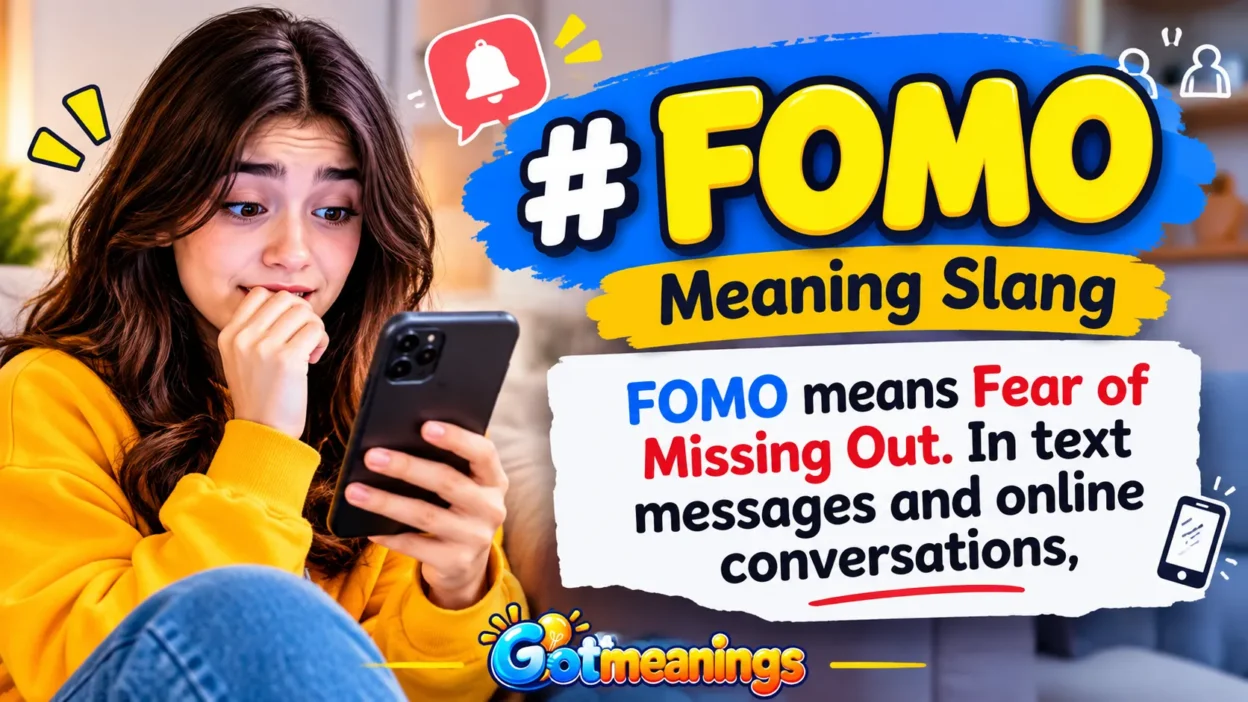
The FOMO meaning slang is one of the most common expressions used in texting, social media, and everyday conversations. FOMO stands for Fear of Missing Out. It describes the feeling of being left out or worrying that other people are enjoying something exciting, interesting, or important without you.
You might feel FOMO when your friends attend a party you cannot join, when you see people traveling on Instagram, or when everyone in your group chat talks about an event you missed. The feeling can be serious, playful, or completely harmless, depending on the situation.
People often use FOMO in messages, captions, comments, and conversations about social events, trends, and experiences. This guide explains what FOMO means, how people use it, its emotional meaning, common examples, and how to respond when someone says it.
| Quick Detail | Meaning |
|---|---|
| Slang term | FOMO |
| Full form | Fear of Missing Out |
| Common meaning | Feeling left out or missing something exciting |
| Typical tone | Casual, emotional, playful, or serious |
| Common usage | Text messages, social media, conversations |
| Related feeling | Worry that others are having better experiences |
What Does FOMO Mean in Text & Chat?
FOMO means Fear of Missing Out. In text messages and online conversations, it describes the feeling that you are missing something fun, exciting, valuable, or important while other people are enjoying it.
The term is often used when someone feels left out of an event, activity, trend, or social experience.
For example:
- Your friends are going to a concert without you.
- Everyone is attending a party you cannot attend.
- Your classmates are talking about a fun trip.
- You see exciting photos from an event you missed.
- Your friends are trying a new restaurant, and you wish you were there.
In these situations, someone might say, “I have FOMO,” meaning they feel unhappy or excited about missing the experience.
FOMO in Simple Words
In simple English, FOMO means:
Feeling like everyone else is enjoying something, and you are missing out on it.
It does not always mean someone is deeply upset. Sometimes people use FOMO jokingly when they want to join an activity.
For example:
Person A: “We’re going bowling tonight!”
Person B: “Wait, I have FOMO now 😂”
Here, Person B is playfully saying that they want to join because the activity sounds fun.
Is FOMO a Feeling or a Slang Word?
FOMO is both an abbreviation and a term used to describe a feeling.
It can refer to:
- The feeling of missing an enjoyable experience.
- The fear of being left out.
- The desire to join something others are doing.
- The worry that others are having better experiences.
- The emotional reaction to seeing exciting activities online.
In everyday slang, people usually use FOMO to describe a relatable social feeling.
Full Form, Stands For & Short Meaning of FOMO
The full form of FOMO is Fear of Missing Out.
Each word explains part of the feeling:
| Letter | Word | Meaning |
|---|---|---|
| F | Fear | Worry or concern |
| O | Of | Connects the expression |
| M | Missing | Not being present or included |
| O | Out | Being excluded from an experience |
FOMO is an acronym formed from the first letters of the phrase.
Short Meaning of FOMO
The shortest explanation is:
FOMO = Fear of Missing Out = Feeling left out.
However, the expression can also describe wanting to participate in something because it looks exciting.
For example:
Person A: “Everyone is going to the beach tomorrow.”
Person B: “I don’t want FOMO. I’m coming too!”
Person B means they want to join the group so they do not feel left out.
Is FOMO an Abbreviation or Acronym?
FOMO is an acronym because its letters come from the initial letters of the words in “Fear of Missing Out.”
People generally pronounce it as “foh-moh,” rather than saying each letter separately.
It is widely understood in casual English conversations, especially when discussing social activities and online experiences.
Origin, History & First Known Use of FOMO
FOMO stands for Fear of Missing Out, but the feeling itself existed long before people started using the abbreviation.
People have always wanted to be included in social activities, relationships, and important experiences. The term gives this familiar feeling a short and easy name.
Where Did FOMO Come From?
FOMO is commonly associated with modern discussions of social behavior and online life.
The expression became especially useful as people began sharing more of their activities through social networking platforms. Photos, videos, event updates, and group posts can make someone aware of experiences they are not part of.
However, seeing the abbreviation online does not automatically mean the feeling began with social media.
Is FOMO a New Slang Term?
FOMO is not a newly invented texting abbreviation.
It is an established expression that appears in conversations about social experiences, digital habits, and emotional well-being.
Its meaning remains simple and consistent: the fear or concern that you are missing something others are experiencing.
A precise first use or single inventor should not be assumed without reliable historical evidence.
How People Use FOMO in Daily Conversations
People use FOMO in many everyday situations. It is especially common when friends discuss plans, social gatherings, travel, entertainment, or exciting experiences.
The term can express a real emotion or simply make a conversation more playful.
1. When Someone Feels Left Out
A person may use FOMO when their friends are doing something without them.
Example:
Person A: “We all went to the new café yesterday.”
Person B: “I wish I had come. I’m getting serious FOMO!”
This means Person B regrets missing the outing and wishes they had joined.
2. When Someone Wants to Join an Activity
FOMO can also be used to show interest in an activity.
Person A: “We’re planning a road trip this weekend.”
Person B: “Don’t make me get FOMO. Save me a seat!”
The reply is playful and suggests that Person B wants to participate.
3. When Someone Sees Something Exciting
People may experience FOMO after seeing photos or videos of an event.
Person A: “Look at these pictures from the concert.”
Person B: “Wow, major FOMO right now!”
Person B feels that the concert looked exciting and wishes they had attended.
4. When Someone Jokes About Missing Plans
FOMO is also used casually between friends.
Person A: “We’re ordering pizza and watching movies.”
Person B: “Without me? That’s FOMO material 😂”
The message is humorous. It does not necessarily mean Person B feels seriously excluded.
5. When Someone Wants to Stay Included
Sometimes FOMO describes the desire to stay connected with a group.
Person A: “Everyone in the group is meeting tomorrow.”
Person B: “I might come just to avoid FOMO.”
This means Person B wants to attend partly because they do not want to miss the shared experience.
FOMO Meaning Across WhatsApp, Instagram, TikTok & Snapchat
The meaning of FOMO usually stays the same across messaging apps and social media platforms.
It still means Fear of Missing Out. What changes is the situation in which someone experiences the feeling.
FOMO on WhatsApp
On WhatsApp, people often use FOMO in private chats and group conversations.
Examples include:
- Friends discussing a party.
- Family members planning a trip.
- Group members sharing photos from an outing.
- Someone asking to join a weekend activity.
Example:
Person A: “Everyone is coming to dinner tonight.”
Person B: “Now I’m getting FOMO. I should come!”
The meaning is that Person B does not want to miss the gathering.
FOMO on Instagram
Instagram can trigger FOMO when users see posts, Stories, or Reels about experiences they wish they had.
For example, someone might see friends on vacation and comment:
“Vacation FOMO is real 😭”
This means the pictures make them wish they were traveling too.
FOMO may also appear in captions about concerts, birthdays, weddings, and special events.
FOMO on TikTok
On TikTok, FOMO may appear in videos about trends, challenges, products, travel, or popular experiences.
Someone might say:
“Everyone is trying this trend. I have FOMO.”
This suggests they want to participate because other people are doing it.
FOMO on Snapchat
On Snapchat, FOMO can describe missing a party, seeing friends together, or watching someone share an exciting moment.
Example:
Person A: “Everyone’s at the pool right now.”
Person B: “Snapchat is giving me FOMO.”
Person B means the Snaps are making them wish they were there.
Does FOMO Have Different Meanings on Different Platforms?
No major platform-specific meaning is required to understand FOMO.
| Platform | Typical Situation |
|---|---|
| Missing group plans or conversations | |
| Seeing exciting posts or Stories | |
| TikTok | Wanting to join trends or activities |
| Snapchat | Missing parties or social moments |
The meaning remains Fear of Missing Out in each case.
Different Meanings of FOMO in Other Fields
Although FOMO is most commonly understood as Fear of Missing Out, it can be used in different settings.
The basic idea remains the same, but the experience being missed may change.
FOMO in Social Life
In social situations, FOMO usually means worrying about missing fun or important experiences.
Examples include parties, vacations, birthdays, concerts, and gatherings.
This is the most familiar everyday meaning.
FOMO in Psychology and Emotional Well-Being
FOMO is also discussed as a social and emotional experience.
It may involve:
- Worry about being excluded.
- Comparing your life with other people’s lives.
- Feeling dissatisfied with your own activities.
- Wanting to stay connected with friends.
- Concern that another opportunity might be better.
It is important to understand that using the word FOMO does not automatically indicate a mental health condition.
People can experience ordinary FOMO without having any disorder.
FOMO in Marketing and Business
Businesses sometimes use FOMO as a marketing idea.
For example, limited-time offers, event announcements, and product launches may encourage people to act because they do not want to miss an opportunity.
This can be called creating a sense of FOMO.
However, a limited offer is not automatically FOMO. The term describes the feeling or motivation that makes someone want to participate before an opportunity disappears.
FOMO in Investing and Cryptocurrency
In investing, FOMO often describes the fear of missing a profitable opportunity.
Someone might buy a stock, cryptocurrency, or other asset because its price is rising and other people seem to be making money.
They may worry that waiting will cause them to miss further gains.
This kind of FOMO can lead to rushed decisions instead of careful research.
Important: FOMO is an emotional reaction, not a reliable investment strategy.
Common Confusions, Mistakes & Wrong Interpretations
Although FOMO is easy to understand, people sometimes confuse it with related feelings.
1. FOMO Does Not Always Mean Jealousy
FOMO and jealousy can overlap, but they are not exactly the same.
- FOMO: You wish you were included in an experience.
- Jealousy: You feel threatened by losing someone’s attention, affection, or position.
For example, seeing friends at a concert may create FOMO because you wish you were there.
Feeling upset because your best friend is spending time with someone else may involve jealousy.
2. FOMO Does Not Always Mean Someone Is Sad
People often use FOMO jokingly.
“I have FOMO” can simply mean:
“That looks fun. I wish I could join!”
The expression does not always indicate strong emotional distress.
3. FOMO Is Not the Same as Being Left Out on Purpose
Sometimes people miss an event because they were not invited.
Other times, they cannot attend because of work, school, travel, or personal reasons.
FOMO describes the feeling of missing the experience. It does not prove that someone intentionally excluded you.
4. FOMO Is Not Always Caused by Social Media
Social media can make FOMO more noticeable, but it is not the only cause.
You can experience FOMO through:
- Friends talking about an event.
- Family members sharing vacation plans.
- Coworkers discussing a gathering.
- Missing a game or concert.
- Hearing about an exciting opportunity.
5. FOMO Is Not an Insult
FOMO is generally not a rude word.
However, someone might use it sarcastically or mock another person’s desire to join an activity.
For example:
“Look who’s got FOMO now!”
This may sound teasing, depending on the relationship and tone.
Similar Terms, Alternatives & Related Slang
Several expressions describe feelings similar to FOMO, but they do not all mean the same thing.
| Term | Meaning | Difference from FOMO |
|---|---|---|
| JOMO | Joy of Missing Out | Feeling happy about skipping something |
| FOBO | Fear of Better Options | Worry that another choice may be better |
| YOLO | You Only Live Once | Encouragement to take an opportunity |
| FOMO | Fear of Missing Out | Worry about missing an experience |
| Left out | Not included | Describes exclusion more directly |
| Jealousy | Fear of losing attention or something valued | Focuses on a perceived threat or loss |
What Does JOMO Mean?
JOMO stands for Joy of Missing Out.
It describes feeling happy, peaceful, or satisfied about not participating in something.
For example:
Person A: “Everyone is going to a party tonight.”
Person B: “I’m staying home with snacks. JOMO!”
Person B enjoys staying home rather than feeling pressured to attend.
What Does FOBO Mean?
FOBO stands for Fear of Better Options.
It describes the worry that another choice might be better than the one you make.
For example, someone may delay choosing a restaurant because they think another restaurant could be more enjoyable.
FOMO vs. JOMO
FOMO makes you think:
“Everyone is having fun. I wish I were there.”
JOMO makes you think:
“Everyone is going out, but I’m happy staying home.”
Both expressions describe different reactions to the same situation.
Examples of FOMO in Real Chat Situations
Here are realistic conversations showing how FOMO appears in everyday messages.
Example 1: Serious FOMO About Missing a Party
Person A: “Everyone looked so happy at the party last night.”
Person B: “I really wish I had gone. I have major FOMO.”
Meaning: Person B genuinely regrets missing the party.
Example 2: Playful FOMO Between Friends
Person A: “We’re getting burgers after class.”
Person B: “Don’t start without me. I’m getting FOMO 😂”
Meaning: Person B jokingly wants to join the meal.
Example 3: FOMO After Seeing Instagram Stories
Person A: “Did you see their vacation Stories?”
Person B: “Yes! The beach looks amazing. Total FOMO.”
Meaning: Person B wishes they were enjoying the same vacation.
Example 4: Sarcastic FOMO
Person A: “We spent three hours shopping yesterday.”
Person B: “Wow, sounds like the experience of a lifetime. FOMO 😏”
Meaning: Person B is being sarcastic. They are probably not genuinely upset about missing the shopping trip.
Example 5: FOMO About a Concert
Person A: “My favorite singer is performing this weekend.”
Person B: “I’m so jealous. I have concert FOMO!”
Meaning: Person B wishes they could attend the concert. The word “jealous” adds emotional emphasis.
Example 6: FOMO About a Group Trip
Person A: “We’re planning a trip for next month.”
Person B: “Please include me. I don’t want to miss this one!”
Meaning: Person B wants to participate and avoid feeling left out.
Example 7: Affectionate FOMO
Person A: “Wish you were here with us ❤️”
Person B: “Aww, now I have FOMO. Save some fun for me!”
Meaning: The conversation is warm and friendly. The heart emoji adds affection.
Example 8: FOMO About a Trend
Person A: “Have you tried that new game everyone is playing?”
Person B: “Not yet, but the FOMO is getting real.”
Meaning: Person B feels tempted to try the game because other people are enjoying it.
Example 9: FOMO About Food
Person A: “We ordered the chocolate cake. It’s incredible!”
Person B: “Why would you tell me that? Dessert FOMO 😭”
Meaning: Person B wishes they could enjoy the dessert too.
Example 10: FOMO in a Group Chat
Person A: “Saturday’s plan is finally confirmed!”
Person B: “I’m in. No FOMO this weekend!”
Meaning: Person B is happy that they will be included in the activity.
How to Reply When Someone Says FOMO
The best reply depends on the situation.
Someone may be joking, genuinely disappointed, asking to join, or expressing interest in an experience.
1. When Someone Has Serious FOMO
If the person feels disappointed about missing something, respond kindly.
Possible replies:
- “We missed having you there!”
- “You should definitely come next time.”
- “Let’s plan something together soon.”
- “Don’t worry, we’ll make more memories.”
- “You can join us next time!”
These responses show that you understand their feelings.
2. When Someone Uses FOMO Playfully
If the message is clearly a joke, you can reply casually.
- “Come with us next time 😂”
- “There’s always room for you!”
- “Next time, you’re definitely coming.”
- “We saved some fun for you!”
- “You should’ve been there!”
3. When Someone Wants to Join Your Plans
If you are comfortable inviting them, make the invitation clear.
Person A: “I’m getting FOMO from your plans.”
Person B: “Then come along! We’d love to have you.”
This is a friendly way to include someone.
4. When You Do Not Understand Their Message
You can ask a simple question.
- “FOMO about what?”
- “What are you missing?”
- “Wait, what happened?”
- “Do you want to join us?”
These replies help clarify the situation.
5. When Someone Is Being Sarcastic
If the person uses FOMO sarcastically, you can respond with humor.
- “Sure, you missed the best snacks 😂”
- “Your loss!”
- “We’ll try to survive without you.”
- “Don’t worry, it wasn’t that exciting.”
Use these replies only when you know the person is joking. Otherwise, they might sound dismissive.
Is FOMO Still Popular? Trends & Online Usage
FOMO remains a recognizable expression in everyday digital communication.
It is useful because it describes a feeling that many people can understand without a long explanation.
Why Do People Continue Using FOMO?
There are several practical reasons:
- It is short and easy to type.
- Its full meaning is widely recognizable.
- It describes a common social feeling.
- It works in casual messages and captions.
- It can be serious or humorous.
- It fits conversations about events, travel, trends, and opportunities.
People may use FOMO when discussing almost any experience they wish they could join.
Is FOMO Only Used by Younger People?
No.
FOMO is not limited to teenagers or a particular age group.
Adults may use it when talking about family events, travel, professional opportunities, concerts, or social gatherings.
Its meaning is based on the situation, not the age of the person using it.
Can FOMO Be Used Outside Texting?
Yes.
FOMO can appear in:
- Spoken conversations.
- Social media captions.
- Online comments.
- Marketing discussions.
- Articles about social behavior.
- Conversations about investing and decision-making.
It is not restricted to text messages.
Is FOMO Always Negative?
Not necessarily.
FOMO can encourage someone to join an enjoyable event or reconnect with friends.
However, it can also create pressure to participate in activities that someone does not actually want to attend.
A useful approach is to decide whether an experience genuinely matters to you rather than joining simply because everyone else is doing it.
Frequently Asked Questions
What does FOMO mean in slang?
FOMO means Fear of Missing Out. In slang, it describes feeling left out or wishing you could participate in something exciting that other people are enjoying.
What does FOMO mean in texting from a girl or guy?
The meaning is the same regardless of who sends it. A girl or guy saying “I have FOMO” usually means they feel they are missing an enjoyable experience or want to join an activity.
Is FOMO a positive or negative feeling?
FOMO can be either. It may create excitement about joining something, but it can also cause disappointment, social pressure, or worry about being left out.
What does “I have FOMO” mean?
“I have FOMO” means “I have Fear of Missing Out.” The person feels they are missing something fun, interesting, or important and wishes they could experience it.
What does FOMO mean on Instagram?
On Instagram, FOMO usually describes the feeling of missing out after seeing someone’s posts, Stories, or Reels about an exciting activity, trip, party, or event.
What is the opposite of FOMO?
JOMO, or Joy of Missing Out, is commonly considered the opposite of FOMO. It describes feeling happy or peaceful about skipping an activity.
Is FOMO the same as jealousy?
No. FOMO is mainly about missing an experience, while jealousy often involves concern about losing someone’s attention, affection, or something valuable.
How do you use FOMO in a sentence?
You can say, “I have FOMO because everyone is going to the concert,” or “Those vacation pictures are giving me FOMO.”
Does FOMO mean someone wants an invitation?
Sometimes. If someone says they have FOMO about your plans, they may be hinting that they want to join. However, it is best to understand the context before assuming they are asking for an invitation.
Is FOMO a mental health condition?
FOMO is generally used to describe a feeling, not a diagnosis. Many people experience it in ordinary social situations. If persistent worries about missing out affect daily life, seeking support may be helpful.
Conclusion
The FOMO meaning slang is simple: FOMO stands for Fear of Missing Out. It describes the feeling of missing something exciting, enjoyable, or important while other people are taking part. You may experience FOMO when friends attend a party, share vacation pictures, discuss a concert, or participate in a popular trend without you.
In texting, FOMO can express genuine disappointment, playful interest, sarcasm, or a desire to join an activity. Its meaning usually stays the same on WhatsApp, Instagram, TikTok, and Snapchat. The surrounding message, emojis, and relationship between the people help reveal its tone.
Remember that FOMO is not always serious or negative.
Sometimes it simply means, “That looks fun, and I wish I were there!” Understanding this expression makes online conversations easier and helps you respond naturally when someone says they have FOMO.

Milo Carter is a tax writer who explains tax terms, rules, and common questions in simple, easy-to-understand language.